Luhačovice Mineral Waters: Springs, Composition, and Healing Properties
Luhačovice is one of the most important spa towns in Central Europe, owing this status primarily to its natural healing springs. Sixteen mineral springs rise within the town and its surroundings, most of which are freely accessible to the public. Luhačovice mineral waters are exceptional for their high mineral content and unique composition—they rank among the most effective natural healing waters in Europe, comparable to the springs in Vichy, Karlovy Vary, or Rogaška Slatina in Slovenia.
Vincentka — the crown jewel of Luhačovice’s springs
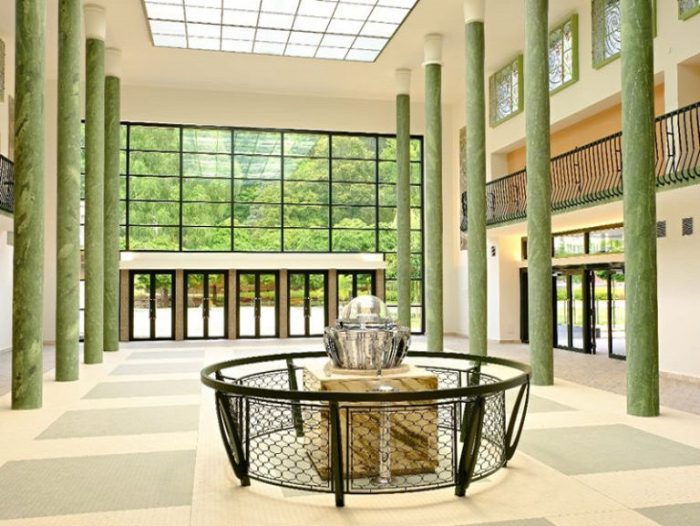
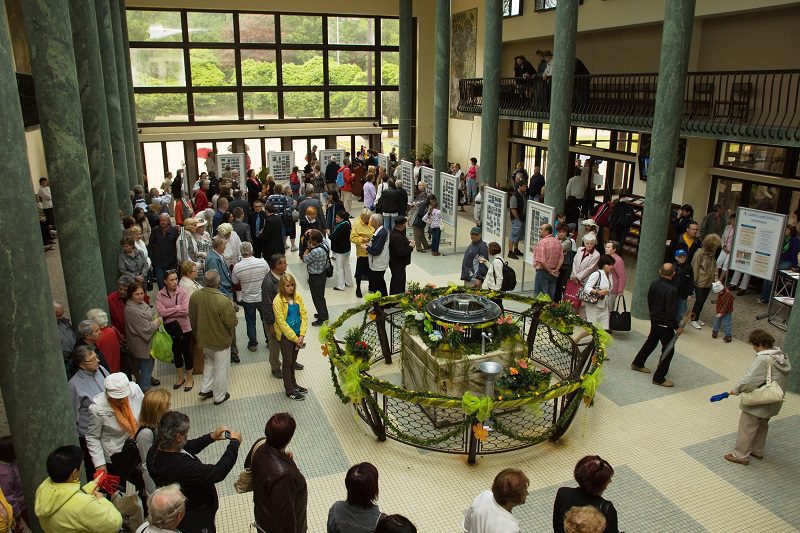
Vincentka is the most famous and valuable of all Luhačovice springs. Its history dates back to the 17th century, when the spring was first developed around 1680. It has borne the name Vincentka since 1792. Today, it flows behind the colonnade in the hall of the same name, where visitors can enjoy it at an impressively designed fountain with a dispensing counter and the option to heat the water.
Vincentka is a natural, highly mineralized water with a total mineralization of approximately over 9 g/l. It is a bicarbonate-chloride-sodium type of water with significant levels of iodine, boric acid, lithium, and other trace elements. It is cold and hypertonic, meaning that the concentration of minerals in it exceeds the concentration in blood plasma.
The therapeutic effects of Vincentka are exceptionally broad:
- Respiratory system — thanks to a balanced mixture of mineral salts, it dissolves mucus in the airways and helps with diseases of the upper and lower respiratory tracts, vocal cords, and allergies.
- Digestive system -- it is used for gastric and duodenal ulcers, chronic liver congestion, and postoperative conditions.
- Diabetes and the pancreas — alleviates diabetes and chronic pancreatitis.
- Regeneration -- it restores balance to the internal environment after physical exertion, febrile illnesses, or significant fluid loss through sweating in athletes.
- Daily iodine intake -- a single sip of Vincentka is enough to meet the daily iodine requirement. It also helps prevent tooth decay in children.
Outside the main hall, Vincentka is available at a new drinking fountain in the center of the renovated spa colonnade, where the former Amandka spring used to be. Current opening hours for the Vincentka hall can be found on the Luhačovice Spa website. Operations are typically limited during the winter, but the drinking fountain on the colonnade is open year-round.
Note: Vincentka is not intended to quench thirst. People with kidney failure, swelling of the lower limbs, or kidney disease should consult a doctor before consuming it.
Ottovka — Luhačovice’s Most Popular Spring
![img_e9104[1]](https://luhacovice.cz/wp-content/uploads/2020/09/IMG_E91041-scaled.jpg)
Ottovka is a symbol of Luhačovice. Its circular pavilion from 1929, designed by architect Skřivánek, has become one of the most photographed structures in the city. The spring rises on the right bank of the Horní Olšava River at the foot of the Malá Kamenná slope, approximately 10 meters higher than the other springs. It originally flowed freely and was not channeled into a stone cellar until 1905. It was named after Count Otto Serényi.
Ottovka has elevated levels of iodine, iron, boric acid, and certain trace elements. Its flow rate is a mere 3 liters per minute, which only underscores its rarity. It is a popular destination for walks and a traditional choice for drinking cures.
Dr. Šťastný’s Spring — A European Sensation
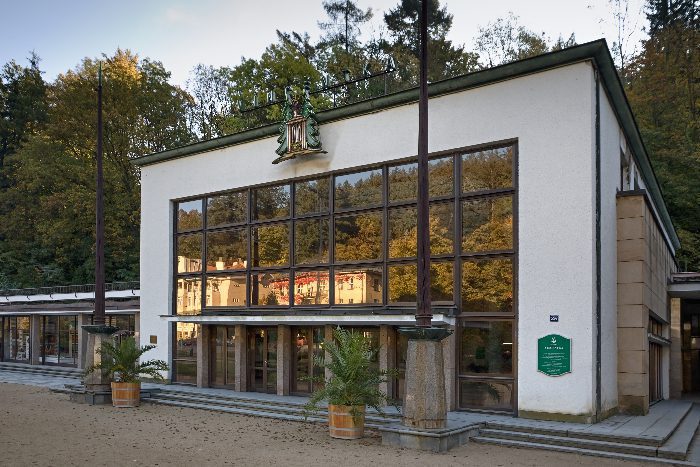
The most interesting story of all the Luhačovice springs belongs to Dr. Šťastný’s Spring. While digging the Janovka well in the early 20th century, an eruption of carbonated mineral water occurred at a depth of 39 meters, shooting up to a height of 20 meters. This “geyser” became a European sensation. The spring was later named after Dr. František Šťastný, a physician tortured to death by the Nazis for helping partisans.
This is a natural, highly mineralized, iodine-rich, carbonated water of the bicarbonate-chloride-sodium type with elevated levels of lithium, strontium, barium, bromides, fluorides, and boric acid. It has the least pronounced taste of all the springs in Luhačovice, making it the most palatable for patients undergoing drinking cures. The flow rate is regulated at 5 liters per minute. It springs from the northwestern foot of Velká Kamenná, northwest of the Spa Theater.
Aloiska — for the stomach and digestion
Aloiska is one of the oldest springs in Luhačovice—it was already known before 1770. It was also called the Forest Spring, the Spring in the Mountain, or Luis’s Spring. It emerges in the park above the Bílá Quarter, about 30 meters higher than the other springs, in a wooden pavilion dating from 1963. Its flow rate is 3 liters per minute.
Aloiska is an ideal mineral water for drinking cures for digestive disorders. Thanks to its location in a pleasant park setting, the walk to Aloiska is itself part of the healing process.
New Jubilee Spring
The newest of the publicly accessible springs rises from a depth of 50.5 meters and has been in use since 1988. In 2013, it was ceremoniously opened to the public in an interesting circular pavilion featuring a drinking fountain shaped like a salt crystal. Mineral water can be drawn from four decorative faucets controlled by a photocell. It is located between the Community Center and the Alpská růže villa.
With a flow rate of 15 liters per minute, it is by far the most abundant spring in Luhačovice. It is particularly recommended for natural mineral baths and inhalations. It operates year-round, even in winter when some other springs are closed.
Marie and Viola — Forest Springs
Marie was discovered between 2008 and 2010 and is drawn from an impressive depth of 144 meters. It is located in the forest above Lázeňské náměstí, near a wooden gazebo by the hiking trail to Jezírko lásky. It is natural, moderately mineralized water of the calcium-sodium bicarbonate (magnesium) type. Calcium strengthens bones and teeth, while sodium supports muscle function and the transmission of nerve impulses.
Viola has been serving patients since the fall of 2010. It emerges in the forest above the Ottovka spring and is conveyed via a 1.3-kilometer pipeline to the Prague Spa Treatment House. Both springs are managed by the Prague Spa Treatment House.
Other springs — Elektra, Amandka, and St. Joseph
Elektra is one of the most concentrated springs in the Luhačovice spring system. It emerges near the Elektra Cultural Center. It has elevated levels of boric acid, iodine, and lithium and an average flow rate of 14 liters per minute. Due to its high mineral content, it was used in the past for the production of spring salt. Today, it is used at the Palace and Morava hotels for inhalations and carbonated baths. During the excavation of the well, animal bones and traces of a fire pit estimated to be 30,000 years old were found at a depth of nine meters—evidence that the local springs attracted people as far back as prehistoric times.
Amandka, the oldest documented spring in Luhačovice from 1669–1680, unfortunately no longer flows to the surface. In its place in the Grand Colonnade, you will now find a Vincentka drinking fountain. The St. Joseph Spring flows near the local church and is managed by the third of the spa companies.
How the drinking cure works
The drinking cure is the cornerstone of spa treatment in Luhačovice. Mineral water is administered twice daily on an empty stomach, either cold or warmed, in a dose of 2.5–3.5 dl for a period of 15–20 days. It is not recommended to eat or drink for the half-hour following consumption. The spa physician determines the appropriate spring, temperature, and dosage based on the patient’s specific health issues.
In addition to drinking cures, Luhačovice mineral waters are used for inhalations, gargling, and rinsing the nasal cavities and nasopharynx. Carbonated baths also play a significant role—carbon dioxide dissolved in a warm bath has a beneficial effect on the circulatory system and improves blood flow throughout the body. Approximately 80,000 carbonated baths and nearly 200,000 inhalations are performed annually in Luhačovice.
What Luhačovice mineral waters help with
Thanks to their high mineral content and unique composition, Luhačovice’s natural healing springs are used to treat a wide range of health conditions:
- Respiratory diseases -- chronic inflammation of the upper and lower respiratory tract, asthma, allergies, post-surgical conditions
- Digestive system diseases -- peptic ulcers, liver and gallbladder disorders, post-surgical conditions
- Musculoskeletal system -- thanks to carbonated baths and overall improvement in blood circulation
- Circulatory system -- support for blood circulation, regulation of blood pressure
- Diabetes mellitus and chronic pancreatitis
- Recovery after cancer treatment
Where to find the springs and practical information
Most of the Luhačovice springs are located in the city center around Spa Square and the colonnade. Vincentka springs up in the hall behind the colonnade, Ottovka and Aloiska in the adjacent parks, Dr. Šťastný’s spring near the Spa Theater, and Nový Jubilejní near the Community Center. The Marie and Viola forest springs are a pleasant destination for a walk above the town.
Access to most springs is free and available year-round, although some springs have limited access in winter. Check the opening hours of the Vincentka hall on the Luhačovice Spa website—during the high season, it is usually open daily in the morning and afternoon, with limited hours in winter. The Nový Jubilejní spring operates without restrictions throughout the year.
The spa season is ceremonially opened each year by the popular Opening of the Springs festival, which takes place on the second weekend in May. Thousands of visitors come to watch the traditional costume parade and the blessing of the individual springs—a tradition that symbolically heralds the start of the new season. You can find an overview of all the springs and their locations on our interactive map.
Vincentka Products
Today, you can enjoy Vincentka not only directly at the spring but also in the form of bottled mineral water and other products. Vincentka a.s. manufactures a nasal spray, lozenges for vocal cord regeneration, toothpaste with natural fluoride and iodine, syrup with plant extracts, and a concentrate for preparing mineral baths at home. These products are available in pharmacies and select stores. Learn more on the Mineral Water Products page.